
“As someone who has personally experienced the hardships of incarceration, I can attest to the transformative power of educational programs in the lives of those behind bars. My journey, marked by a series of misguided choices, led me to become an unfortunate participant in the U.S. judicial system. My time in prison coincided with the global COVID-19 pandemic, which made an already challenging situation even more daunting.
During this dark period, I found it difficult to maintain mental stability while enduring the strict conditions of my confinement. However, a turning point arrived when I joined the District of Columbia Department of Corrections (DOC) Educational Program, led by Dr. Lopez and her team. From the very first day, my outlook began to change as I gained access to the FastCase law library and enrolled in various educational courses.
The introduction of technology, coupled with high-quality courses available on educational tablets, made a significant difference in my daily life. The monotony of my prison routine gave way to a newfound sense of purpose, as I eagerly pursued knowledge and challenged myself with new concepts. This mental exercise felt akin to a physical workout, where my mind and cognitive skills grew stronger with each lesson.
Through my dedication and hard work, I completed several courses and earned certificates of accomplishment in programs such as the Skillsoft exam preparation course, Georgetown Law Mini course, and National Correction Works. These educational experiences allowed me to make the most of my time in a restrictive environment and set the stage for personal growth.
It is a widely acknowledged truth that incarceration is a grueling and highly stressful experience, one that takes a toll on an individual’s mental health and overall well-being. By implementing educational programs and enacting necessary reforms, we can provide incarcerated individuals across the U.S. with opportunities to mitigate the adverse effects of confinement, while also fostering their rehabilitation and personal development.
As these individuals prepare to re-enter society, the knowledge and skills they acquire during their incarceration can serve as a solid foundation for a successful reintegration. With the tools and capabilities gained through educational programs, they can pursue meaningful careers and contribute positively to their communities. In this way, we can unlock the potential of those who have been incarcerated and help them build a brighter future.” – Rodion B.
My name is Warren Allen and I’m a recipient of a Second Chance. I served over two decades in federal prison. I was previously released under the DC City Council, Incarceration Reduction Amendment Act – Better known as the IRAA bill. Like many men/women returning home after serving long sentences in various locations across America, I was in deep contemplation about my future after incarceration. I felt inferior to the world I was returning to. I didn’t have to look farther than Hand2Heart to receive the essential tools that all returning residents reentering to society need. The informed staff met me where I was after being absent from civilization for so long. They infused me with job resumé training, work force development skills, computer literacy adaptability and social networking opportunities. All was needed to revive my confidence as a returning citizen in search for a career path. I give the utmost gratitude to Hand2Heart for equipping me with the skills and experience to land my first ever full time job as an End Life Imprisonment Campaign Strategist with the Sentencing Project.
The correct programming for returning citizens can lower recidivism. Ultimately, trading in one’s previous experiences for professional development can save lives. And I’m living proof, thanks to Hand2Heart.
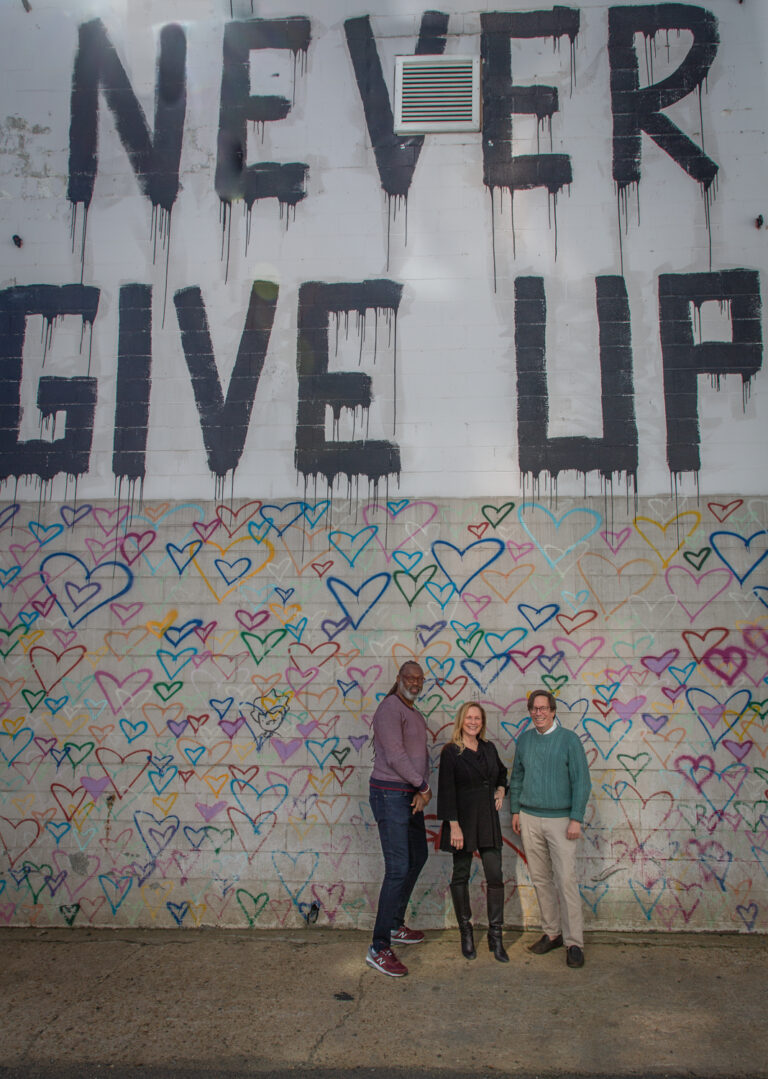
I first met the Hand2Heart team while I was incarcerated in the D.C. jail. It was during Covid, and I was just trying to survive. These three were there for me nearly every day. They didn’t see me as a case file or a mistake. They saw a man with potential. As a Black man sitting in a cell, that meant something. They pushed me to dream beyond my sentence and believe that my life wasn’t over.
With their support, I earned my associate’s degree and then my bachelor’s degree while I was still in pre-trial. When it came time for sentencing, they stood beside me and spoke on my behalf. Knowing someone believed in me enough to show up like that gave me strength I didn’t know I had. Even while I was in federal prison, they stayed connected — answering calls, responding to letters, reminding me to keep building and not lose hope.
When I was released, one of them drove all the way to Ohio to bring me home. I didn’t come home to uncertainty. Housing was waiting for me. Within days, I had a job. I wasn’t scrambling. I wasn’t sleeping on someone’s couch. I had a real chance.
Before my arrest, I worked as an electrician and solar technician. With Hand2HeartDC’s help, I stepped back into that trade. I’ve worked for the State of Maryland, the District of Columbia, and private homeowners across the region. Today I’m a licensed master electrician and the owner of my own business. I’m preparing to hire other returning citizens because someone once reached back and pulled me up.
Hand2HeartDC didn’t just help me reenter society. They helped me reclaim my dignity, my purpose, and my future.
Questions about enrolling, support services, programming, or who we are? We’d love to hear from you!